

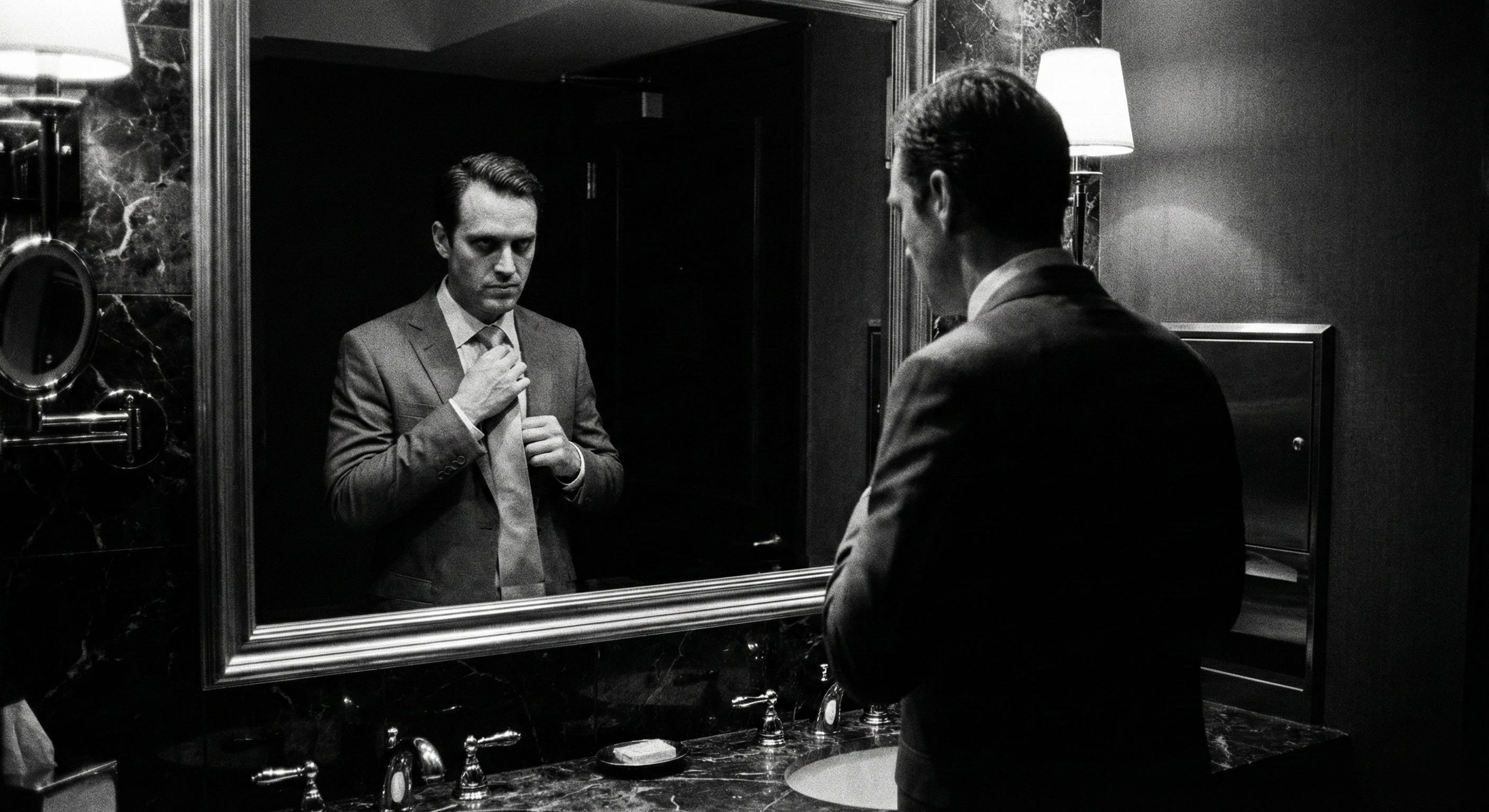
We love the story that power corrupts. It is a convenient narrative.
If power corrupts, then the leader who turns into a tyrant was simply “overtaken” by the role. It absolves them (and us) of the messy reality of character. It suggests that the office changed the person.
But as the biographer Robert Caro spent decades documenting in the life of Lyndon B. Johnson, the truth is quieter and much more unsettling: Power doesn’t corrupt. It reveals.
Power is not a transformative force that turns decent people into monsters. It is a high-definition lens. It strips away the necessity for pretense. When you have no power, you have to be polite, collaborative, and patient to get things done. You have to mask your worst impulses just to survive.
But when you get the title? The budget? The leverage? The mask comes off.
The question isn’t how power will change you. The question is what power will unmask about who you already are.
The Volume Knob
Think of your character traits… impatience, generosity, insecurity, ego… as tracks on a mixing board.
In a junior role, the master volume is kept low by social constraints. You can’t interrupt the CEO because you’ll get fired. You can’t steal credit because you need your peers’ help next week.
Leadership turns the master volume up to ten.
If you were slightly dismissive of feedback as a manager, you will be insulated and deaf as a VP.
If you were prone to small white lies to avoid conflict, you will build a culture of systemic dishonesty as a Founder.
If you were secretly insecure about your intelligence, you will hire only “yes men” who never challenge you.
Power provides the resources to fully fund your own neuroses.

The Small Tells
Power rarely announces itself with a villain monologue. It leaks out in the boring, everyday friction of management.
If you want to know who a leader actually is, ignore their Town Hall speech. Watch the five seconds after they get interrupted.
The Interruption: When someone cuts them off, does their tone sharpen instantly? Do they snap? That snap was always there; power just removed the filter that used to hold it back.
The Credit Economy: Watch who appears in the “win” email. A leader who needs to be the smartest person in the room will erase their team’s contributions with surgical precision, rationalizing it as “taking ownership.”
The Bad News Filter: How do they react to a missed metric? If the messenger gets shot, the team learns to hide the gun. Power amplifies the desire to only hear what feels good.
These micro-moments paint a portrait of leadership behavior that no PR team can scrub.
The Self-Interest Masquerade
The most dangerous revelation of power is rationalized selfishness.
We all have self-interest. But power gives you the ability to dress up your self-interest as “Organizational Strategy.”
You prioritize the project that gets you visibility over the one the company actually needs.
You delay a difficult decision because you want to avoid the headache, calling it “strategic patience.”
You keep a toxic high-performer because they make your numbers look good, claiming it’s for “business continuity.”
Leaders who insist they are immune to this are usually the ones deepest in the trap. The terrifying thing about power is how easily it convinces you that what is good for you is inherently good for everyone.
The Mirror
Stop waiting for power to “change” you. It won’t. It will just let you be yourself, louder than ever before.
If you are stepping into a higher-leverage role, do not look for external threats. Look at your current habits. Look at the small, petty things you do when you are tired or stressed.
Because soon, you won’t have to hide them. And that is when the real test begins.
Power will reveal you. The only question is: Do you like what it’s going to show?
References & Resources
The Power Paradox (Dacher Keltner) Keltner’s research from UC Berkeley turns the Machiavellian view of power on its head, arguing that empathy is what gains us power, but holding power chemically erodes our ability to empathize. https://www.penguinrandomhouse.com/books/317208/the-power-paradox-by-dacher-keltner/
Robert Caro on Power (The Paris Review) An essential interview with the biographer of LBJ and Robert Moses, where he articulates his thesis that power reveals rather than corrupts. https://www.theparisreview.org/interviews/6442/the-art-of-biography-no-5-robert-a-caro
Leadership and Self-Deception (The Arbinger Institute) A framework for understanding how we rationalize our own behaviors and treat others as objects rather than people; a tendency that power magnifies. https://arbinger.com/books/leadership-and-self-deception/
Does Power Corrupt or Reveal? (Association for Psychological Science) A breakdown of the psychological studies suggesting that power frees people to act on their existing goals and values, whether altruistic or selfish. https://www.psychologicalscience.org/news/releases/power-doesnt-corrupt-it-just-exposes-who-leaders-really-are.html