

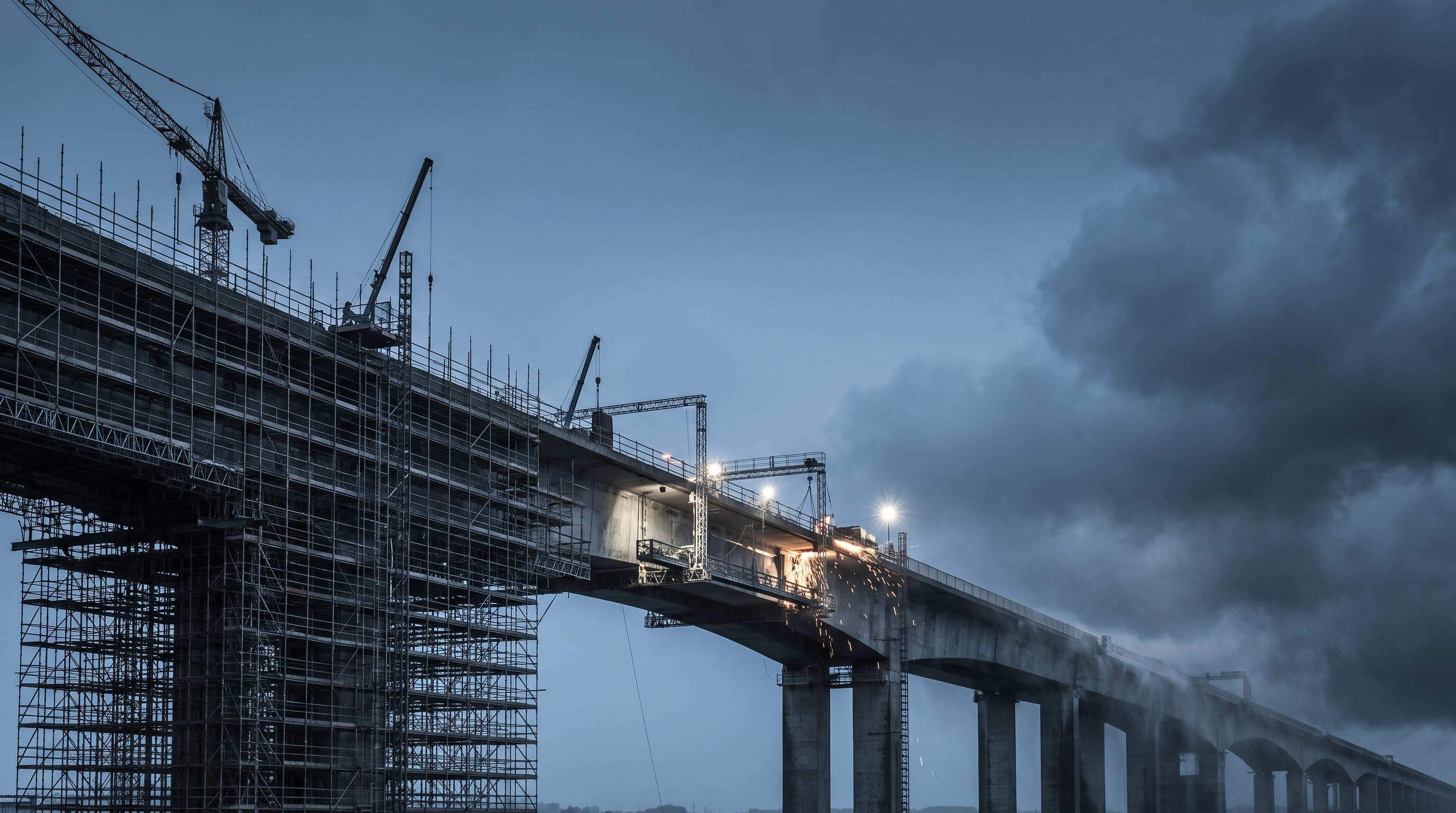
I know a kind of leader who’s been running in “go” mode for three years. Every quarter is a sprint. Every initiative is urgent and every plan is a transformation. Ask them what a normal week feels like and they can’t tell you, because they don’t remember one.
From the outside it looks like drive. Up close, after enough years of it, it usually isn’t. They’re not moving faster than everyone else. They’re moving scared, and somewhere along the way the speed stopped being a choice and became the proof that they still matter.
I’ve been that leader. So this isn’t a diagnosis I’m handing down from a safe distance.
The Season That Never Ends
Right now the whole industry is telling that leader they are right to never stop.
The message lands from every direction. Reinvent the org. Rebuild the operating model. Redesign every function for AI before someone else does it first. Every planning cycle comes with the same implied threat: if you are not transforming, with the impact slides to prove it, you are already behind.
Some of that is real. AI is going to force genuine rebuilds in places that have been coasting for years. But here is the part the transformation story usually skips: most of an organization, most of the time, does not need to be rebuilt.
It needs to be kept running.
Kept honest.
Kept from quietly falling apart while everyone’s attention is pointed at the next big thing.
That is not a building season. We just don’t have a flattering name for the one it actually is.
Build, Maintain, Defend
Strip the work down and there are roughly three modes.
Building is the one everybody knows. A new system, or a new team, or a capability that didn’t exist last year and exists now. It’s the season that gets the headlines and the promotions, and it’s genuinely thrilling. It’s also the rarest of the three, and it is not the natural resting state of a healthy company.
Maintaining is what most leadership actually is. The unglamorous work of keeping a good thing good: retention, repair, trust, standards, compliance, documentation and the slow upkeep that never shows up in a launch announcement.
Engineers already know the math, even if the org chart pretends otherwise. A large share of software’s lifetime cost comes after launch, not before it. Depending on the system and the source, maintenance is often estimated at somewhere around sixty percent of lifecycle cost, and in some long-lived systems much higher.
The launch is the photogenic part.
The years of keeping it alive are the actual job.
Defending is the third one, and it’s the mode most leadership writing forgets. It isn’t building and it isn’t steady-state maintenance. It’s holding a line under pressure: the layoff stretch, the breach, the downturn, the months where the work is protecting your people and your systems from harm that’s actively looking for a way in. I spent a long career in security, so I don’t mean defense as a metaphor. I mean the operating posture of keeping real damage from reaching real people. It has a completely different texture than building. Mistake one for the other and people get hurt.
None of these is the advanced version of the others. They’re different work, with their own rhythm and their own definition of a good day.
The Tell
So how do you know which mode you’re actually in?
The fastest test is to look at what you’re adding versus what you’re protecting. In a real building season, addition is the point. You’re supposed to be making new things. In a maintenance season, every new thing you bolt on is weight the system has to carry, and a leader who keeps adding is usually doing it to feel productive, not because the organization needs more surface area.
The harder test is internal, and I’ll be honest about it because I’ve failed it. If you’re wired to build, a maintenance season feels like decline. It feels like you’ve lost your edge, like the interesting part is behind you, like you should be doing more.
That feeling is almost never accurate.
The discomfort of a maintenance season isn’t a signal that something’s wrong. It usually means you built something worth maintaining, and now the job is to not wreck it out of boredom.
I went from founding a security function at a company I’ll leave unnamed, which was pure building, to holding teams steady through years of industry-wide layoffs, which was maintaining and defending at the same time. The second was harder. It was also less visible, less celebrated and more important.
Nobody hands you anything for the attrition that didn’t happen.
Before You Add Anything Else
The AI moment is manufacturing building seasons everywhere, and a lot of them are anxiety wearing a strategy costume. Every org feels pressure to call itself transformational. Plenty are doing ordinary maintenance at high volume and calling it reinvention, because reinvention is the only season the current story rewards.
The cost of getting this wrong is not abstract. Transformation fatigue is now measurable. Workers report burnout, exhaustion and pressure from the frequency of change as much as from the change itself.
You can run a team in building mode for a while.
You cannot run one there forever.
A leader who cannot tell the difference will try.
So name one part of your organization that’s in a maintenance season and you’ve been treating like a building project.
Stop adding to it.
Start protecting what’s already there.